The Story Behind October: Cancer Awareness Month

Every October, the world turns pink. Ribbons, landmarks, and even sports uniforms take on the color as people come together to honor those affected by cancer and to spread awareness about prevention and early detection. But how did October become Cancer Awareness Month — and why pink?

The movement began in 1985, when the American Cancer Society and the pharmaceutical division of Imperial Chemical Industries (now AstraZeneca) launched the first Breast Cancer Awareness Month. Their goal was to encourage women to schedule regular mammograms and to talk more openly about a disease that was often kept private.

The now-familiar pink ribbon was introduced in 1992 by Evelyn Lauder of Estée Lauder Companies and Alexandra Penney, editor of Self magazine. They distributed pink ribbons in department stores to raise awareness and funds for breast cancer research.

Pink was chosen because it represents compassion, care, and hope — emotions that capture the spirit of those who fight and those who support them. What started as a small gesture quickly grew into a global symbol of unity.

Since then, October has become a month not only for breast cancer awareness but also for recognizing all cancers and the people whose lives they touch. Across the world, cities light up in pink, communities organize charity walks and fundraisers, and survivors share their stories to inspire others.

Thanks to decades of awareness and research, survival rates for breast cancer have improved dramatically. But the work isn’t done. Cancer still affects millions of people worldwide, and early detection remains one of the most powerful tools we have.

October is a time to get screened, donate, or simply wear pink to show your support. Every small act — every ribbon, every reminder — helps raise awareness and gives hope to those who need it most.

Because when we come together, awareness becomes action, and action saves lives.

Here at Shachihata, we offer a pink pocket stamp which we donate a part of the proceeds for each stamp sold to cancer research. So if you would like to learn more about our pocket stamp and want to help cancer research at the same time, please click here.

The Return of the International Personalization & Awards Expo in 2023

We’re looking forward to exhibiting at the upcoming International Personalization & Awards Expo, February 7-10, 2023 in sunny Las Vegas!  This is the first Expo since 2020, so it should be a great show. This is your chance to see all that has been going on in the Personalization and Marking industries over the past couple of years. Be sure to come by our booth (#736) and say hello, we are looking forward to seeing you again and reconnecting with the industry as a whole.

Get Your Free (non-member) Expo Pass Here!

  • Your unique promo code is: Xstamper23
  • Enter this promo code when registering for the show

We hope to see you there!

What’s Your Technique?

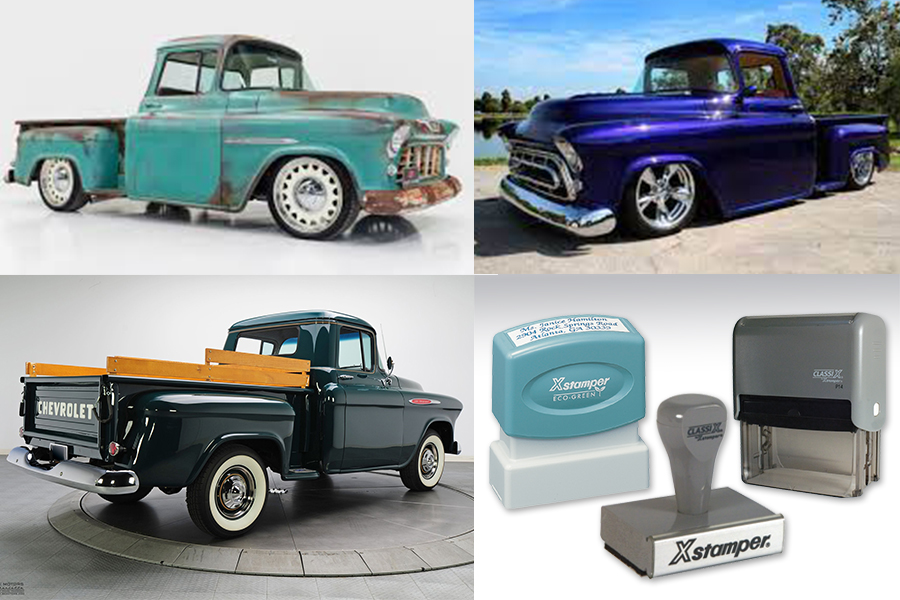
Recently, I was streaming a show on vintage car restoration, and it got me thinking. The show featured 3 different types of restorers. The first one specialized in traditional restoration projects, restoring a car back to its original state. Each part is meticulously replaced with a new version of the original equipment. Once they were done with the car, it was exactly as it was on the day it rolled off the assembly line decades earlier.


Next up was a car builder, who took a different approach. Their concept was to restore the car to its (more or less) original appearance but with all new modern parts: tires, rims, motor, disc brakes, power steering, A/C, airbags, GPS, etc. These cars are sometimes known as resto-mods. The end result is a vehicle with the original charm and appearance of a classic car but with all the modern amenities.


The final car builder was a hot rod/custom shop. When they finish a car, it has all the mechanical parts updated and replaced. Still, the vehicle’s outer appearance remains as-is: no new paint and very little bodywork, if any. This approach allows the vehicle to remain “original” with the original patina, paint, and maybe even a few rough spots.


All 3 of these shops offer different approaches and ideas on restoring an automobile and what the result should be. Bill’s Backyard Classics breaks down these approaches. Which one is your favorite? Do we sometimes discount and dismiss older ideas in our relentless push for the newest, greatest thing?


In our industry, many businesses are looking to purchase a rubber stamp that is laser-cut to produce a clean, sharp image. Then there are the businesses that prefer the “old school” traditional rubber stamp and ink pad approach. These people prefer the appearance of the impression, desiring a more rustic and aged look. Coffee shops, book stores, and many other retailers use these stamps for branding bags and gift certificates, among other uses. Then there are the companies that want a rugged stamp that can achieve repetitive marking with no added frills.


As we step further into the future, we find that some past techniques and tools do not necessarily need to be improved upon because if they are, the desired end-effect would be lost. We will encounter countless new innovations and products, most of which make our lives better, but every now and then, it’s hard to beat a time-honored and proven product. The Xstamper family of stamps is a bit of both. From traditional stamps to self-inkers to the world’s greatest Xstamper pre-inked stamp, our products remain as innovative as they are proven.