
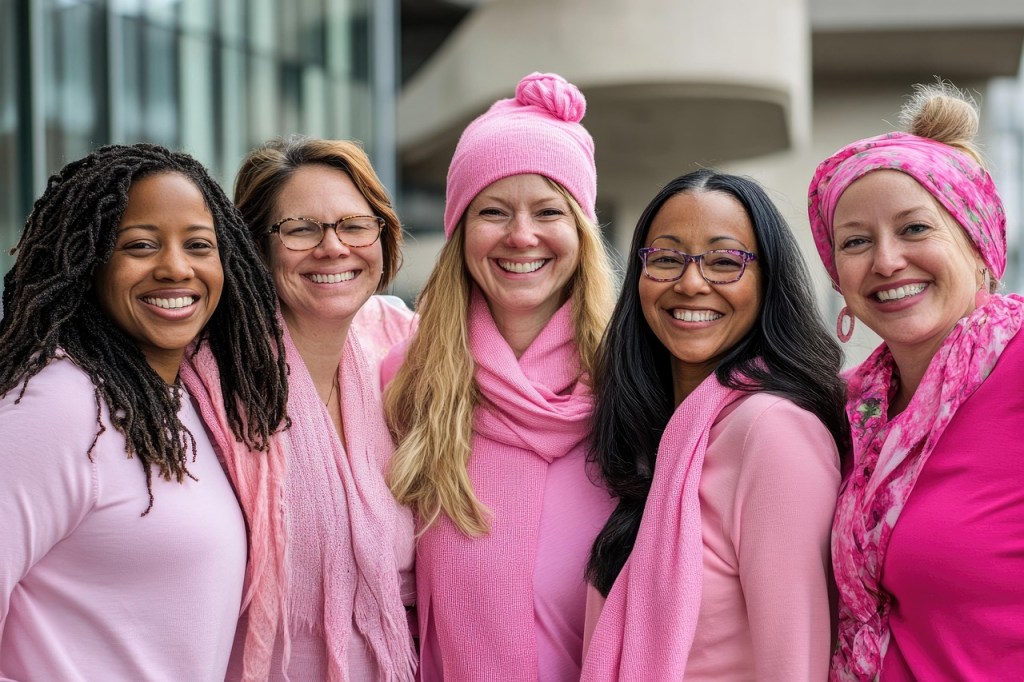
Every October, the world turns pink. Ribbons, landmarks, and even sports uniforms take on the color as people come together to honor those affected by cancer and to spread awareness about prevention and early detection. But how did October become Cancer Awareness Month — and why pink?
The movement began in 1985, when the American Cancer Society and the pharmaceutical division of Imperial Chemical Industries (now AstraZeneca) launched the first Breast Cancer Awareness Month. Their goal was to encourage women to schedule regular mammograms and to talk more openly about a disease that was often kept private.
The now-familiar pink ribbon was introduced in 1992 by Evelyn Lauder of Estée Lauder Companies and Alexandra Penney, editor of Self magazine. They distributed pink ribbons in department stores to raise awareness and funds for breast cancer research.
Pink was chosen because it represents compassion, care, and hope — emotions that capture the spirit of those who fight and those who support them. What started as a small gesture quickly grew into a global symbol of unity.
Since then, October has become a month not only for breast cancer awareness but also for recognizing all cancers and the people whose lives they touch. Across the world, cities light up in pink, communities organize charity walks and fundraisers, and survivors share their stories to inspire others.
Thanks to decades of awareness and research, survival rates for breast cancer have improved dramatically. But the work isn’t done. Cancer still affects millions of people worldwide, and early detection remains one of the most powerful tools we have.
October is a time to get screened, donate, or simply wear pink to show your support. Every small act — every ribbon, every reminder — helps raise awareness and gives hope to those who need it most.
Because when we come together, awareness becomes action, and action saves lives.
Here at Shachihata, we offer a pink pocket stamp which we donate a part of the proceeds for each stamp sold to cancer research. So if you would like to learn more about our pocket stamp and want to help cancer research at the same time, please click here.
 Shachihata Xstamper